
About the craft
The Down Shawl – a "Guest of Honour" at Any Wedding
At all times, a wedding has been one of the brightest and most memorable, yet also most exciting and responsible days in any young woman's life. Since ancient times there have been a great many traditions and rites connected with the ceremony uniting two loving people; some have survived to this day, others have been almost forgotten. Today we will talk about the down shawl as a "participant" in wedding ceremonies and festivities, and as one of the symbols of a happy family life.
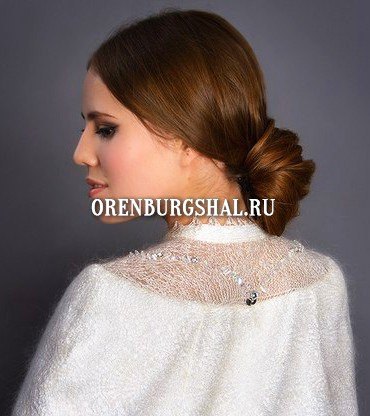
The tradition of giving.
A kind of "white flag on a conquered fortress". Just as a man today gives his chosen one a ring, many years ago a young woman gave her groom her down shawl or warm shawl as a sign of her consent to marry him. After such a gift the celebration began, which, by the way, was called "Platok" ("The Shawl"). The future head of the family was also determined with the help of a shawl back then (whoever first stepped onto the spread-out shawl would be the head).

A symbol of new life.
In the old days there were two variants (sometimes both at once). First: the bride's mother gave her daughter a down shawl (necessarily white) in honour of the wedding . A snow-white shawl on the head symbolised marriage, the beginning of a new stage in the young woman's life. There were also cases when Orenburg down shawls were given by the bride's mother to both people getting married.
Second: the bride received a shawl or warm shawl as a gift from her future mother-in-law. In this case it symbolised the same thing; the difference is that everything happened during the church wedding. It was the groom's mother who was honoured to remove the bride's veil and tie a down shawl on her head.

Social traditions.
In the old days, wearing down shawls was generally considered good form for married women. They symbolised piety, the young woman's decency and that she was happily married. Funnily enough, a certain "social inequality" was present here too. For example, peasant women wore a shawl on the head and tied it under the chin (this was called "the women's way"). As for the nobility, high society and married aristocrats, they mainly used light wraps, which could once again subtly emphasise that the lady belonged to a certain class of society.

And what about today?
Whatever anyone says, some of these traditions have not sunk into oblivion even today. Some people seriously observe them from generation to generation; others find it fun to add them to a modern wedding or, on the contrary, to hold a "retro-style church wedding".
Down shawls periodically "take part" in creative wedding games. Some people today still use a down shawl as an "indicator" of the head of the family, in place of the modern tradition of biting the karavai loaf.

By the way, we took this information not from just anywhere, but from our own statistics. Yes, from time to time we receive orders from newlyweds, their friends and relatives, both for down items specifically for the wedding and church ceremony and for ordinary down shawls and gossamer shawls to complete the bride's look.
Wedding "down" traditions that have come to us from ancient times can still become an original adornment of any wedding today. If you, too, want to add them to your celebration, you can contact us, and we will certainly help and choose the very best for you!
Need help choosing?
Tell us who you are choosing an item for and what matters to you — warmth, lightness, size or pattern. We will suggest suitable options.


