
About the craft
Zapryad and Nezapryad Thread. Quantity or Quality?
People interested in knitting down shawls, those just taking their first steps in this difficult and interesting craft, and ordinary buyers who want to buy or knit a high-quality item often ask: what are zapryad and nezapryad thread? What is the difference between them and, most importantly, which yarn is better? For experienced craftswomen the answer is absolutely clear-cut; we will try to help beginners.
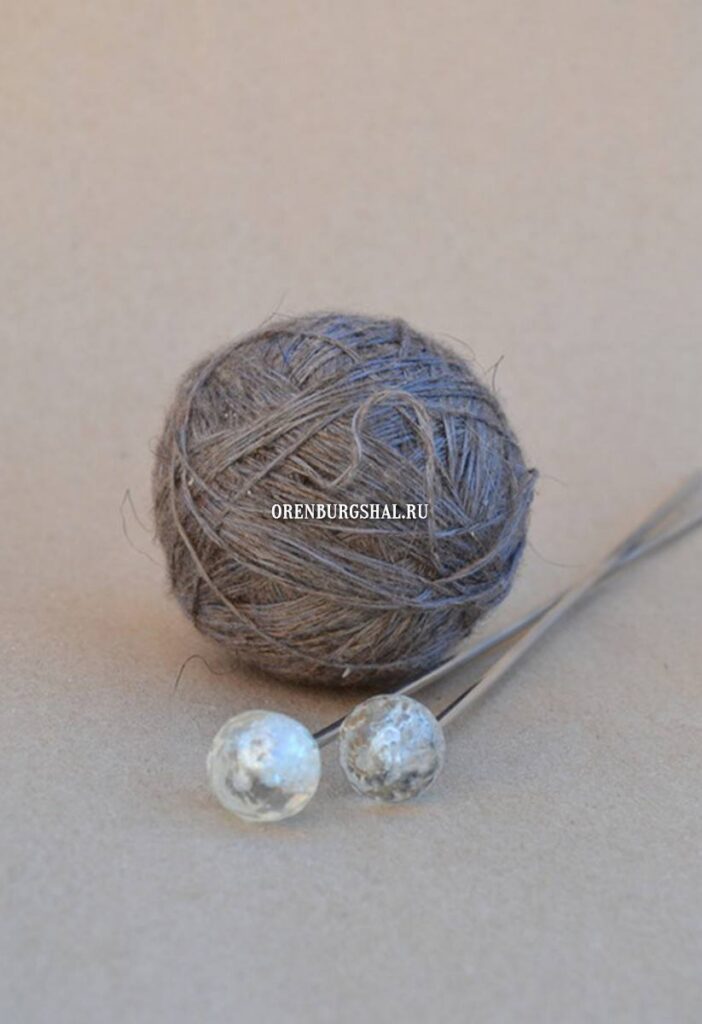
First, let's figure out what zapryad and nezapryad (spun) yarn actually are. Let's start with the simpler option – zapryad thread. The process does not take as much time as making spun thread, so it is often used by some knitters who work "for quantity". The essence of the method is that the thread formed from combed-out down is immediately spun onto the "base" (pure down thread cannot hold on its own, it simply falls apart, so the so-called base of the yarn is cotton or silk). With "zapryad" there is no so-called "twisting" with the cotton thread – which is exactly what takes a great deal of time.

However, down knitters themselves mostly regard zapryad yarn with a certain amount of contempt. The method itself is often called "slapdash", and they say that "real Orenburg shawls are not knitted like that". And there is some truth in this. The thing is that items made from zapryad yarn are not very strong because of the lack of "twisting". As a result, such warm shawls and shawls start to "shed" almost immediately after purchase. By the way, items knitted with "zapryad" yarn can be recognised at a glance: a shawl made this way is already fluffy, although, as we know, a genuine Orenburg down shawl is initially smooth. Alas, the stereotype of initial "fluffiness", together with the ability of dishonest traders to convince ordinary buyers of anything, takes its toll, and such items are often bought by uninformed people. The result is predictable: the down "sheds", stays on clothing, often prickles and eventually quickly falls out, leaving the purchased warm shawl in an unsightly state.

Nezapryad yarn is another matter. The process of making it is more complex and much longer, but only this way is the high quality and strength of the finished item guaranteed. The essence of the method is that first the down is spun separately and only by hand, forming the down thread, after which, for strength, it is twisted with the cotton thread, in the direction opposite to the spinning. By the most modest estimates, this process can take from 12 hours! But it is from this yarn, and only this yarn, that genuine Orenburg down shawls are made. As you have already understood, the method is used by craftswomen who work "for quality". Such shawls are initially smooth (and this is the primary sign of quality) and take on average from two weeks to a month to knit, but it is exactly such items that are genuine.

Well, we hope we have managed to explain the difference between these two types of yarn clearly. If you are an ordinary buyer, you will be able to tell a high-quality item from a poor one. If you are a beginner knitter, it is up to you alone to decide whether to work for quantity or for quality. Thank you for your attention; we hope our review was useful!
Need help choosing?
Tell us who you are choosing an item for and what matters to you — warmth, lightness, size or pattern. We will suggest suitable options.


