
About the craft
Interview with N.N. Pushkarev, Associate Professor of the Department of Livestock Technology, OSAU
Since our company is interested in supporting, preserving and promoting high-quality items made of genuine Orenburg down, we try to study comprehensively the questions related to obtaining it and its unique properties. In our effort to prove that Orenburg down really is one of the best, we actively communicate with specialists from various fields of down knitting as well as science and livestock farming. Last week, professional advice was kindly given to us by a man with 23 years of experience in animal science (mainly with down goats) – Candidate of Agricultural Sciences, Associate Professor of the Department of Livestock Technology and Processing of Livestock Products of Orenburg State Agrarian University, Nikolay Nikolaevich Pushkarev. Nikolay Nikolaevich explained in detail where our down goats came from, told us about the distinctive features of Orenburg down and gave his expert comparative assessment.
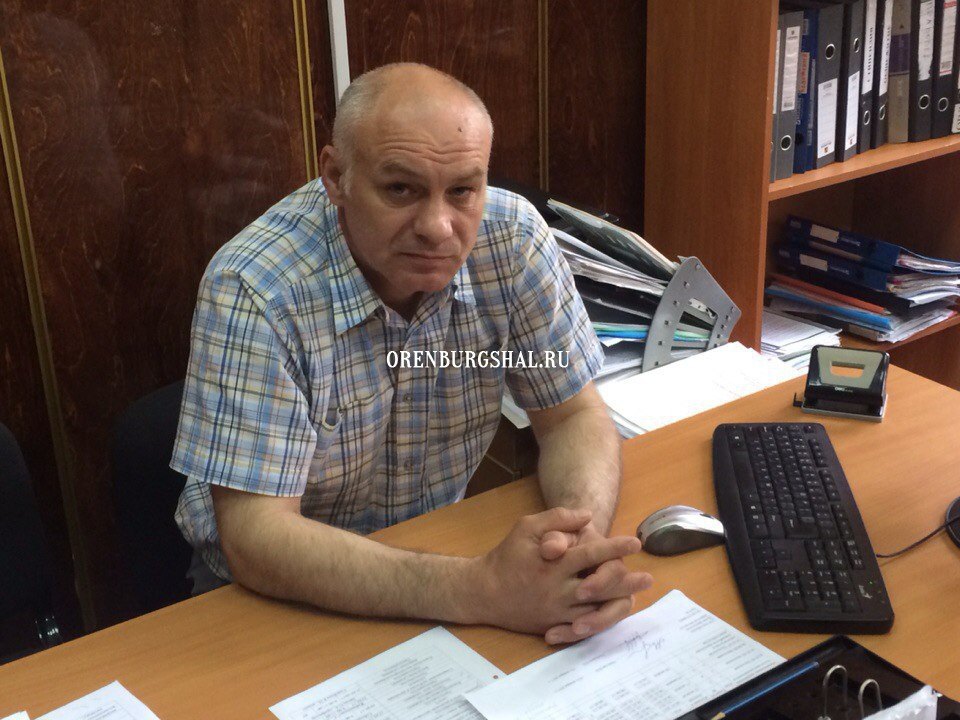
So, Orenburg down goats are first and foremost a selectively bred breed (that is, developed on the basis of many years of selection).

"In fact, Orenburg goats are descendants of Kashmir goats," Nikolay Nikolaevich explained, "the 'Kashmirs' themselves came from China to Uzbekistan along the Silk Road, and from there to the Orenburg Governorate, which at that time covered a fairly large territory."
It was here, in our landscape and climatic conditions, that selective breeding began. The key factors were the live weight of the goats and the quality of the down, with length and fineness (in effect, the thickness of the fibres) taken as the main indicators. Nikolay Nikolaevich noted that Orenburg down goats are the largest of all existing ones.

In the course of selection, the breeders achieved impressive results in body weight and down fineness, but improvement in length was needed, as the down was still too short for processing with the equipment of the time. Therefore, bucks of the Pridonskaya breed were brought in, whose down was longer but coarser, which again made further selective breeding necessary so that the "ideal" breed would have down that is soft and fine but at the same time long and strong. The efforts paid off: today the down of Orenburg goats is up to 5 cm long, which makes it workable in terms of processing.
By the way, among other things, Nikolay Nikolaevich told us about the recent visit of a professional goat breeder and editor of the American magazine "Wild Fibers Magazine", Linda Cortright, who gave Orenburg down a very high score.

Nikolay Nikolaevich's own expert assessment is as follows: Orenburg down really is the finest, yet quite strong, "in strength in no way inferior to sheep's wool". Since the down fibres themselves are hollow tubes, it conducts heat excellently, which is why warm shawls made of Orenburg down really can keep you as warm as a down jacket or coat. According to Nikolay Nikolaevich, perhaps only Chinese down can compete with Orenburg down in fineness, but it is not long enough and not as easy to process.
"Orenburg down really can be used anywhere," says Nikolay Nikolaevich, "Germany used to buy it from us too: for blankets and other items, and by the way, they were pleased with the result."
In the end, Orenburg down received the highest assessment from a true professional, which once again speaks of its quality and indisputable advantage over all other types of down. Nikolay Nikolaevich himself is the winner of many awards, including for active assistance to the agricultural cooperatives of our region and for advisory assistance to the publisher of "WildFibers"; he is the author of more than 50 scientific works and 7 teaching manuals (2 of them approved by the Ministry of Agriculture of the Russian Federation). Nikolay Nikolaevich was pleased that we are trying to find a scientific basis in support of Orenburg down and agreed to continue giving us professional advice when necessary.
Need help choosing?
Tell us who you are choosing an item for and what matters to you — warmth, lightness, size or pattern. We will suggest suitable options.


