
About the craft
The Local History Museum of the Saraktash District
When it comes to modern and historical "production centres" of the Orenburg down shawl, the Saraktash District cannot be ignored. It is in Saraktash and the surrounding villages that today there are the most craftswomen who have preserved invaluable experience over several generations and continue to create handmade down items.
Alas, the craft as a whole is in decline. Times are not the best today for Saraktash itself either, once one of the historical centres of down knitting, with its own production, a large artel and enormous cultural significance for the Orenburg region.

Since we see preserving and reviving the craft as one of our main tasks, we could not fail to pay tribute to a stronghold that in one way or another holds on to this day, and to get to know the culture and history of the region more closely. Not only of down knitting, but of culture as a whole. For this purpose we went to the local history museum, which, to be fair, is not that easy to find – we had to ask local residents for directions.
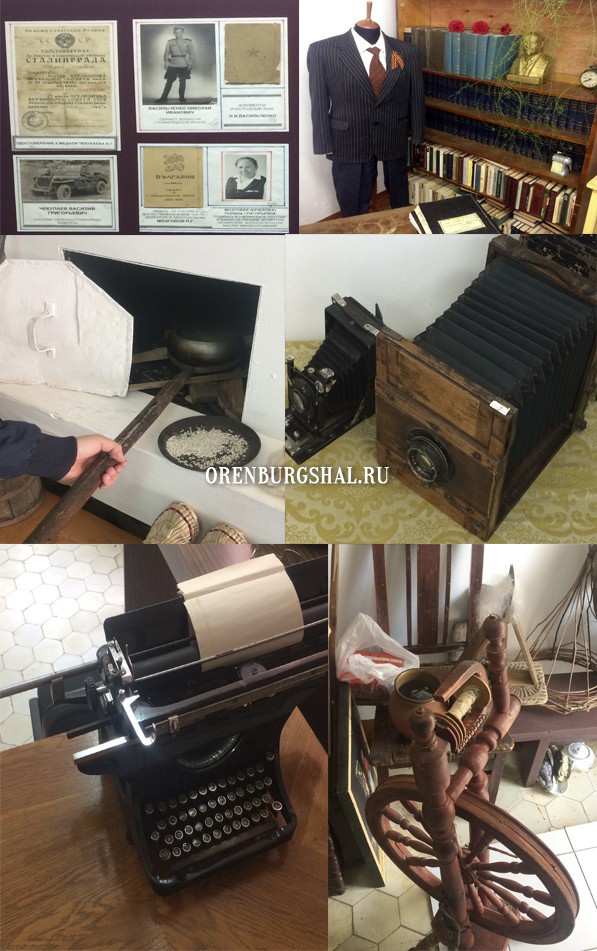
The exhibition is located on two floors and essentially immerses you in the history of the Saraktash District from prehistoric times to the end of the 20th century (and this is only the main collection; from time to time the museum hosts modern exhibitions). We were introduced to the variety of exhibits by our guide Oksana.


It should be said straight away that the Saraktash Local History Museum is a unique institution. Unique because it was created entirely on a private voluntary initiative. The idea of creating it came to an ordinary school teacher, M.M. Chumakov. Patriotically minded pupils and their parents happily supported the initiative. Other residents of the settlement did not stand aside either; this is how the first exhibits for the museum collection were gathered, and in 1982 the museum was officially opened for the first time.


Oksana told us that the vast majority of exhibits were found by residents in the Saraktash District or made with their own hands, when it comes to so-called "folk crafts". Among the exhibits there are even fossilised remains of plants and animals from the Carboniferous and Cretaceous periods, also found not by research expeditions but by ordinary caring residents of the region.


Of course, the down-knitting craft has not been left out either. On the first floor there is a separate display case entirely devoted to Orenburg down items. Most of its contents were collected and donated to the museum by Chumakov's pupils.


The room fully styled as a local peasant hut deserves special attention; it perfectly conveys the flavour of an entire era (in the photo below).


The second floor is mainly a kind of "alley of glory" dedicated to the memory of the participants of the Great Patriotic War. Yes, there are many participants of those terrible events from the Saraktash District, including heroes of the famous Battle of Stalingrad. This exhibition presents historical documents, awards and personal belongings of soldiers and officers, and there is even an "echo of war" – fragments of ammunition literally removed from the wounds of those who fought. (Note: we once wrote an article about the years of the Great Patriotic War and the role of the down-knitting craft in those years; if you are interested, you can read it here).


According to the guide, the museum still continues from time to time to receive new exhibits brought by local residents. Sometimes whole exhibitions appear, for example an exhibition of paintings by the artist and Saraktash native Tatyana Vayman entitled "I Love You, My Native Land".


All of this taken together cannot but please. To this day there remain caring people who fight to preserve the history and culture of their land. To this day our region is full of talents, which, alas, are getting harder and harder to discover. But as long as there are people like the creator and staff of the museum, like the masters of down knitting and other crafts of our region, as long as the spirit of patriotism and love for their home region lives in them, we can say that we have not lost our historical values, and that culture and crafts, having survived decline, will revive and develop further.
Need help choosing?
Tell us who you are choosing an item for and what matters to you — warmth, lightness, size or pattern. We will suggest suitable options.


