
About the craft
Orenburg Shawls Saved People in the Hardest Times
In their memories, craftswomen have repeatedly called the Orenburg down shawl a "breadwinner", and practising the craft a salvation from hunger, poverty and serious trouble (yes, salvation from serious trouble, you heard right).
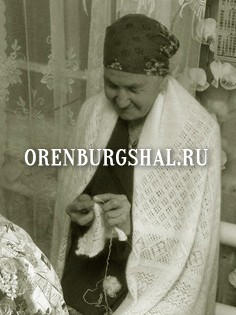
What did our knitters mean when they called the Orenburg shawl a "saviour"? If you look at the ambiguous and rather dark pages of our history, everything becomes clear.
The war years
A time when goat down items saved lives in the most direct and literal sense. Although the down-knitting craft has little to do with the defence industry, in those years it was not completely forgotten; production and raw material supplies were maintained, and knitters worked both for the direct needs of the front and for the needs of the home front.


We have already written about their indispensable work during the Great Patriotic War and the contribution of Orenburg knitters to our victory . Be sure to read our articles on this topic if you want to understand what they contributed to our free future.
Post-war collectivisation
The social and political initiatives of the late 1920s–1930s still provoke heated debate and, needless to say, a lot of negativity. One of the most controversial phenomena was the process of collectivisation, interrupted by the Great Patriotic War but resumed in the post-war years.


Let us recall that the collective economy in the village meant a tax (often an unbearable one) both on each household and on the village as a whole. From the memories of one of our craftswomen:
"There were quotas. From each household, one cow or four goats. Everything was handed over: meat, milk, grain. The village chairmanship reported upwards. If you didn't fulfil the plan, expect trouble."


And here is the most interesting part. As it turns out from the craftswomen's stories, the collective farm took not only milk, meat and other produce. Material valuables (including ordinary money) could also serve as a kind of tax, which the collectors readily accepted, and neither the local nor the higher leadership, to whom they answered, objected to this in any way.
"There was practically no way to pay in milk or meat. And that threatened big trouble," recalls the same knitter, "but more than half the village knitted shawls. They knitted, sold and gave what they got to the collectors. For a while the village was left alone. Until the next collection."


From eyewitness accounts it follows that even in that difficult time Orenburg shawls had value and were in demand, ultimately helping to "buy off" the collectors, who cared much more about fulfilling the plan than about the villagers' problems, thus saving whole villages from starvation.
The crisis of the 1990s.
A time of perestroika, uncertainty and the collapse of a huge number of enterprises. A time when the largest down artel, which had operated successfully for more than half a century, finally ceased to exist, leaving hundreds and thousands of craftswomen without work...
And again the skills of the down-knitting craft came to the rescue.


"We sold shawls, knitted and sold. Sometimes to middlemen at the markets, sometimes friends of friends came from other cities, or even countries. Those who were luckier then. You knit a shawl, sell it, and you won't starve this month" – from the memories of one of our knitters.
Over the years of the craft's prosperity, down items had indeed become widely known all over the world, and although the craft as a whole was then practically destroyed, there were people who showed interest and created demand, even if small. In the years of fragmentation and spontaneous trade, this saved more than one knitter's family from utter poverty.


What conclusion can be drawn from this small study? Even in the most difficult times for the country and the region, the down-knitting craft, despite everything, was not completely destroyed. One way or another, it continued to exist: spontaneously, in fragments, unofficially... but it continued. And the existence of demand for down items, which allowed the craft to stay afloat even where its final collapse was predicted, speaks – we are not afraid of the word – of the almost immortal relevance both of folk crafts in general and of the down knitting of the Orenburg region in particular.
This is confirmed today as well. After the last upheaval and the heaviest blow to all industries in the 1990s, the craft is recovering again, and interest in down shawls from Orenburg is growing steadily. For our part, we try to contribute to this process by systematising production and bringing you all the interesting information we manage to find, gathering it bit by bit, just like the down-knitting craft of the Orenburg region itself.
Need help choosing?
Tell us who you are choosing an item for and what matters to you — warmth, lightness, size or pattern. We will suggest suitable options.


